任何哪怕稍微接触过计算机编程的人都知道,现代 AI 编程助手和智能体在生成大量可运行代码方面效率惊人。但使用这些工具的程序员也很清楚不能盲信这些代码的准确性,这意味着需要花费大量精力去审查任何 AI 生成的输出。Anyone who has even tangentially associated with computer programming knows that modern AI coding assistants and agents can be incredibly efficient at generating huge amounts of functional code. But coders making use of those tools also know better than to trust the accuracy of that code, meaning substantial effort needs to be spent reviewing any AI-generated output.
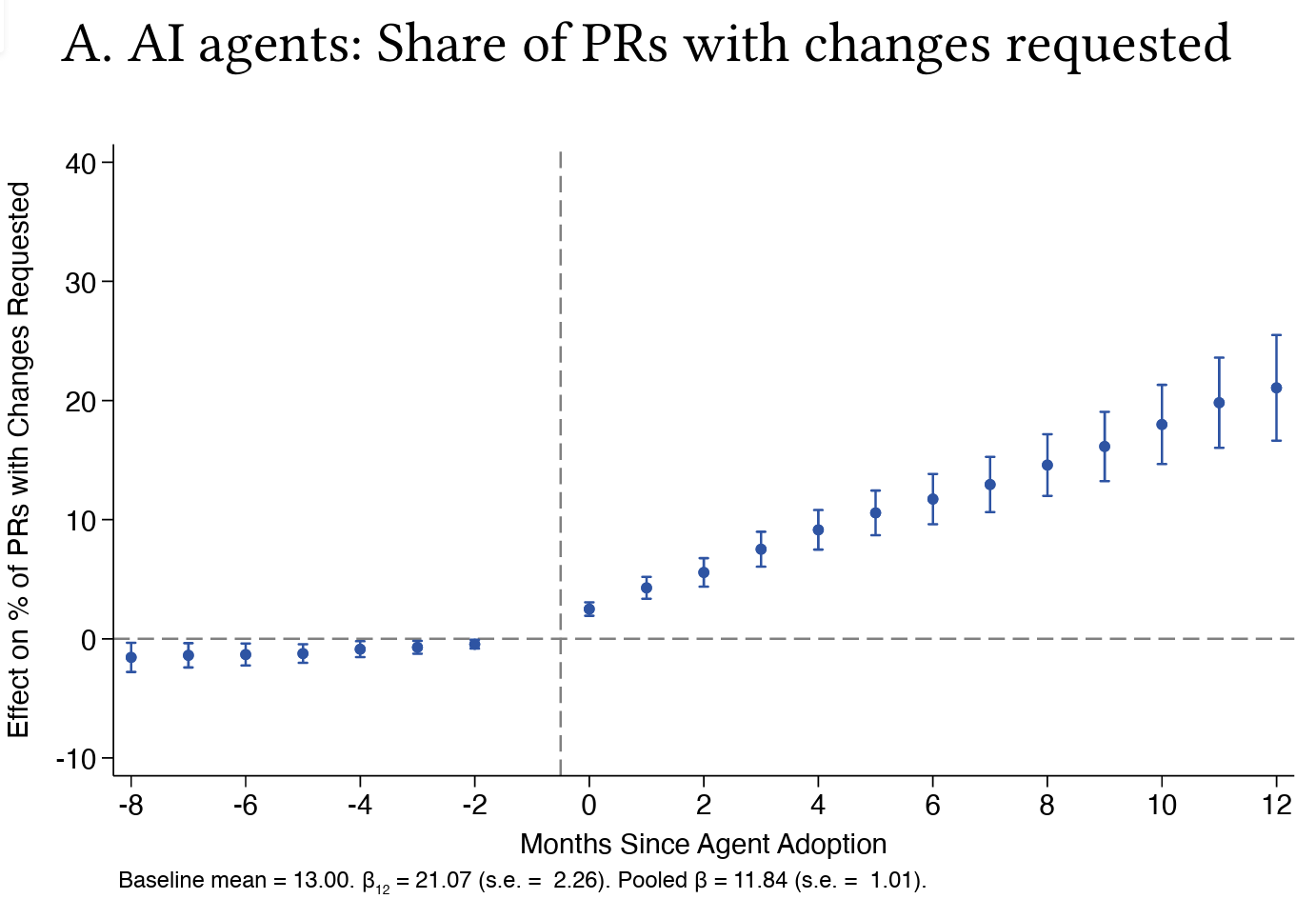
一项针对数百家公司实际编程实践的近期研究发现,人工代码审查构成了 AI 编程工具整体效率的一大“瓶颈”,结果显示“几乎没有证据表明公司因使用这些工具而增加了软件产出或减少雇员”。研究作者发现,实际编码阶段提升的任何效率都会“被生产流程中的下游制约所吸收”;因为“代码审查流程的时长显著增加,拉取请求(pull request)更有可能被要求修改,审查者留下的评论也更多”。A recent study of actual coding practices across hundreds of firms finds that human code review forms a significant “bottleneck” for the overall efficiency of AI coding tools, resulting in “little evidence that firms increase software output or reduce employment” by using them. Any efficiency increased during the actual coding phase, the study authors find, is “absorbed by downstream constraints in the production process”; as “the code review process significantly increases in length, pull requests are more likely to require revisions, and reviewers leave more comments.”
先量两次,再剪一次Cut once, measure twice
为得出这些结论,哈佛大学研究人员 Fiona Chen 和 James Stratton 利用了 Jellyfish 的汇总分析数据,该公司可测量工程团队的细粒度产出。这些数据涵盖 2021 年至 2026 年 3 月间、来自 700 多家相关软件开发公司的 70 多万名员工的 3 亿条独立的“工作事件”(如提交和拉取请求),以及任务管理软件数据。To come to these conclusions, Harvard University researchers Fiona Chen and James Stratton made use of aggregated analytics data from Jellyfish, which measures the granular output of engineering teams. That data encompasses 300 million individual “work events” (e.g., commits and pull requests) and issue management software data across more than 700,000 employees at over 700 relevant software development firms from 2021 through March of 2026.
为评估 AI 工具对这些公司的影响,研究人员结合直接测得的 AI 使用数据和 GitHub 活动分析,确定每家公司何时开始在工作流中引入 AI 编程助手(主要帮助人类作者自动补全代码)和/或 AI 编程智能体(根据提示词自主编写并提交代码)。随后,研究人员通过一些复杂的数学计算,在不同组织于不同时间点引入这些工具前后的关键变量上进行“双重差分”回归分析。To assess the impact of AI tools on these firms, the researchers used a mix of directly measured AI usage and analyses of GitHub activity to determine when each company started introducing either AI coding assistants (which can help auto-complete code primarily authored by humans) and/or AI coding agents (which primarily write and submit code autonomously based on prompts) into their workflows. The researchers then perform some complicated math to determine a “difference of differences” regression on key variables both before and after the introduction of these tools at different points in time across different organizations.
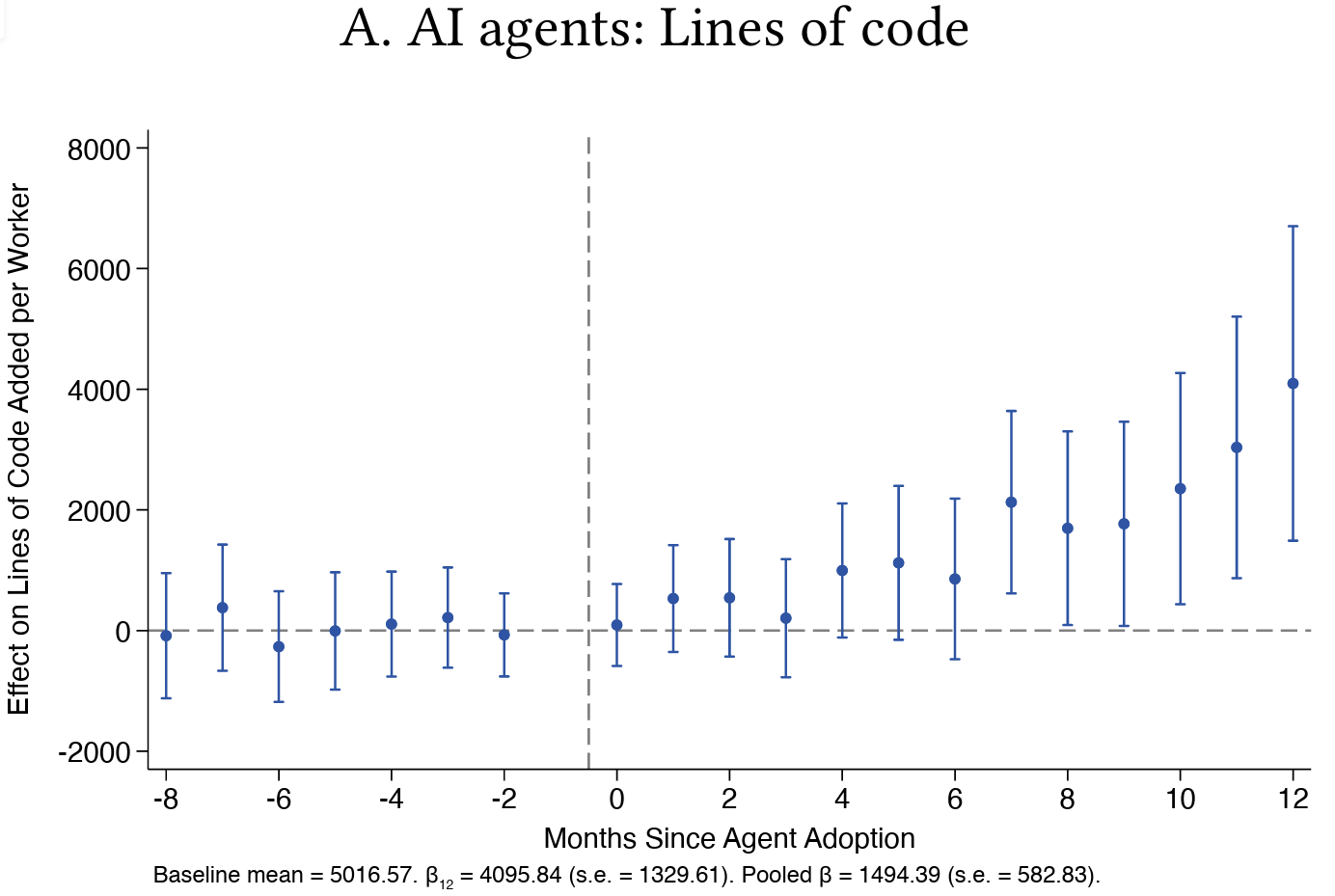
就产出的原始代码而言,结果清晰而醒目。研究人员写道,公司引入 AI 编程智能体后,生成的代码总行数增加 30%,提交总数增加 20%,拉取请求平均增加 23%。但所有这些额外的代码并未直接转化为公司层面软件产出的提升。恰恰相反,Jira 等工具追踪的 Issue 和 Epic(即完整的软件功能)的解决率在引入 AI 工具后并未出现统计上显著的变化(研究人员还发现,在引入 AI 前后,这些 Jira 追踪的议题在规模或复杂度上也没有“结构性变化”)。In terms of raw code being produced, the results are clear and stark. The introduction of AI coding agents at a firm leads to a 30 percent increase in total lines of code generated, a 20 percent rise in the number of total commits, and a 23 percent increase in pull requests on average, the researchers write. But all that extra code doesn’t translate directly into improved software output on the firm level. On the contrary, the resolution rate for Issues and Epics (i.e. wholesale software features) tracked by tools like Jira did not change in a statistically significant way after AI tools were introduced (the researchers also found no “compositional shift” in the size or complexity of those Jira-tracked issues across the AI introduction).